
Making social + physical experiences feel “Like Home” for vulnerable demographics
• Role: Lead Researcher
• Research Type: Qualitative+Quantitative, Generative, Attitudinal
• Methods: Survey, In-person & online Interviews, focus groups
• Timeframe: 12 months
• Budget: £30,000
• Team:
2 investors
1 designer
1 marketing coordinator
1 director of research
1 outreach administrator
1 head of operations
• Impact: 105 spaces UK-wide coached, +20% engagement rates
CHALLENGE
“Third Spaces” are community hubs welcoming a wide range of people. However, they are not always adapted to accommodate and serve vulnerable demographics.
As a result, user engagement from this section of the user base drops dramatically.
Research Questions
• What are the main pain points of third spaces?
• What does the average user want to see in priority?
• What solutions meet users’ needs within budget and technical constrains?
Goals
• Increase engagement and retention rates
• Establish priority and frequency of pain points at national level
• Issue and implement recommendations based on user feedback
SOLUTIONS
National online survey
• 1,200 individual responses collected (1% of estimated national population)
• 110 responses from organisations
• 74% completion rate
• 12:30 mins average completion time
• Tools: Tally.so, Excel
Qualitative Interviews
• 23 individuals selected from the quantitative survey (Zoom/Teams/in-person)
• 8 practitioners and organisations
• Transcription with DaVinci Resolve
• Coding agentic workflow and analysis with Gemini
Focus Groups
• Multiple focus groups with 60 participants in total
• Transcription with DaVinci Resolve
• Coding agentic workflow and analysis with Gemini
Statistical Modelling
• 50,000 data points
• Linear and non-linear regressions
• Data processed with Excel and Gemini
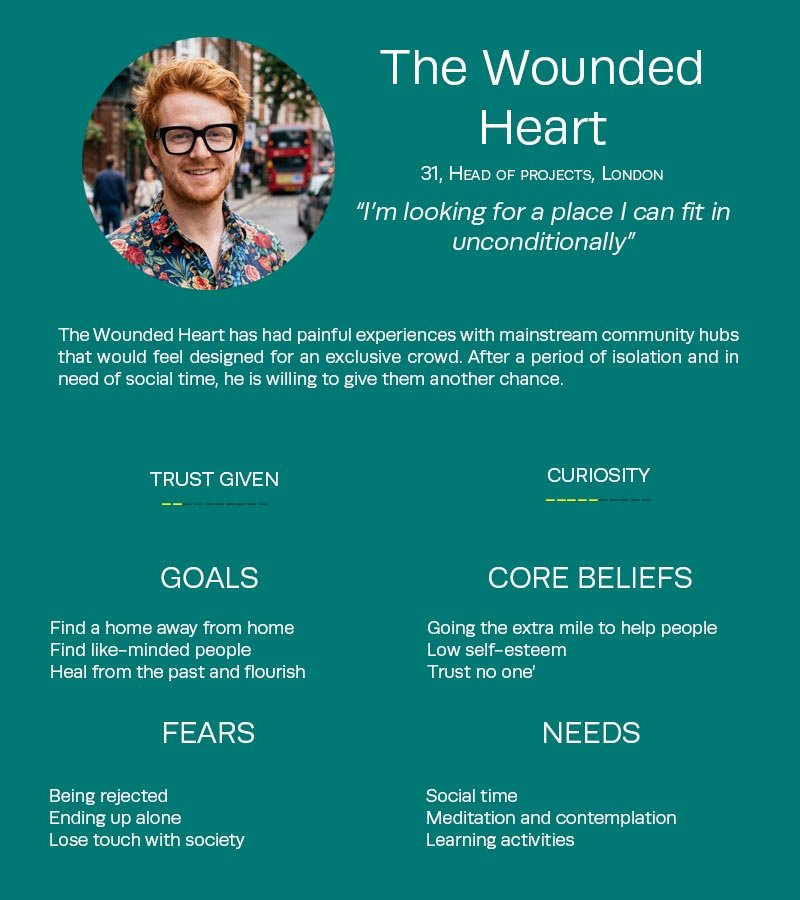
“It’s a space I didn’t have before; I felt so isolated. Here, it’s come as you are. It’s a non-judgemental space and it’s all fed into each other. We have every generation, children, elders who see things differently, who have seen different things in life.”
Participant
OBSTACLES
Uptake stall: Social Media doesn’t work!
Obstacle: Social Media yields very poor engagement results
Solution: Using personal contacts and networks, messaging directly and individually people on messaging services, using mailing lists from trusted partners
Bureaucratic limitations
Obstacle: Funders wanted a qualitative-only study
Solution: Pitching the quantitative study as a first of its kind, easy to achieve, and reflect on potential loss of credibility if reporting on small sample only. Also, past a certain threshold, qualitative studies hit diminishing returns
Old school paper data
Obstacle: for our statistical modelling, some partners only had paper records
Solution: Scan, digitise and format data with the help of LLMs into ready-to-analyse spreadsheets
FINDINGS
1. The main pain points include: social isolation and access to knowledge.
2. The main users’ want is a “buddy system” but this service is resource-heavy and poses safeguarding issues.
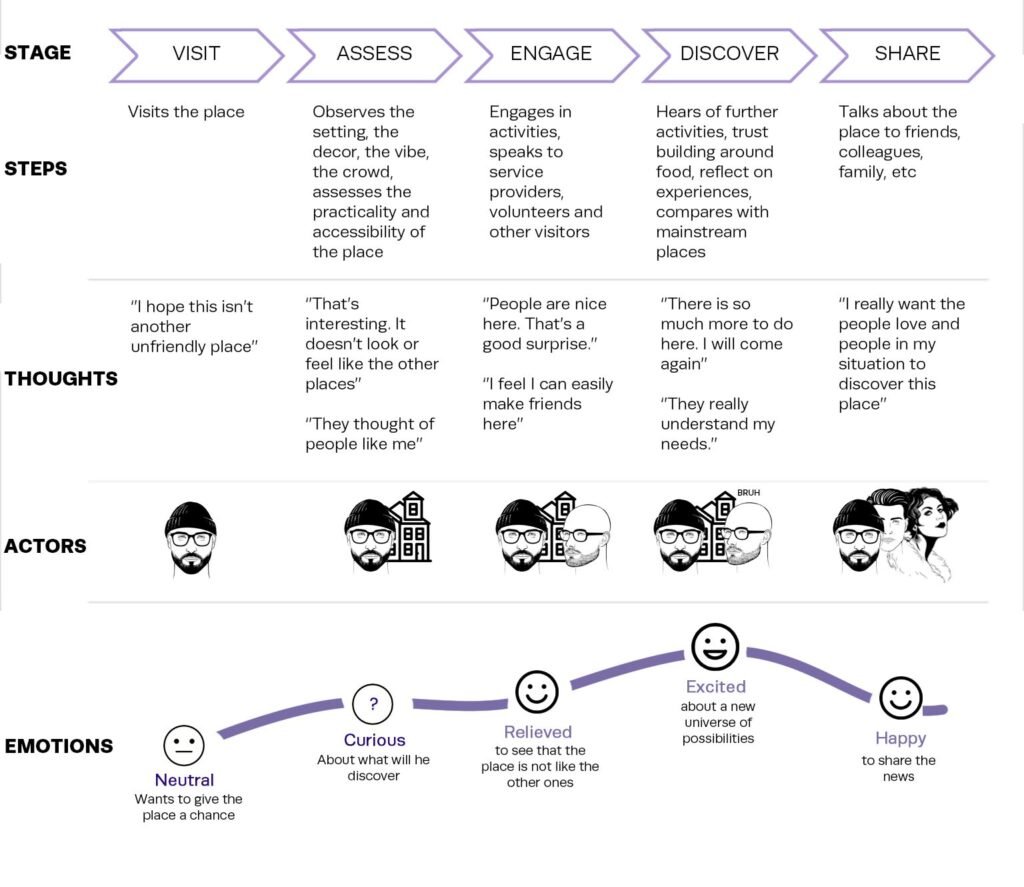
3. Users find a majority of spaces to exclusive and secluded from society.
RECOMMENDATIONS
1. Organise social meetups and online or in-person courses.
2. Have a dedicated and trained, dedicated team that can refer people to specialised services.
3. Get involved in services to the general society (cleanup days, soup kitchens, etc)
IMPACT
+20%
Engagement rate
105
Sites and organisations coached across the UK and as many concrete pledges for change
20+
National media articles